

Master of Arts in Art History and Curatorial Studies
Two paths, distinct possibilities
Choose the Art History concentration to deepen your knowledge of art and visual culture through advanced research, critical analysis and historical study. Or pursue Curatorial Studies, integrating critical theory, contemporary art history, exhibition history and practical exhibition experience. Both concentrations benefit from Hite's galleries, professional partnerships and visiting speakers, preparing students for careers in the arts and further graduate study.

Application Deadlines
Course Catalog
Requirements and courses below pull from the university catalog.
Master of Arts in Art History and Curatorial Studies
Unit: College of Arts and Sciences (GA)
Department: Art and Design
Program Webpage
Academic Plan Code(s): See Concentration Requirements tab.
Program Information
The Department of Art and Design, endowed as the Hite Institute of Art and Design, offers a Master of Arts (MA) in Art History and Curatorial Studies. The 31-credit-hour program includes a shared core curriculum and a concentration in either Art History or Critical & Curatorial Studies.
Art History Concentration
The MA in Art with a concentration in Art History provides advanced expertise in the history of art. This course of study equips students with the coursework, language skills, and research experience necessary for further graduate study or for careers in museums or educational settings. Students may choose from in-depth courses on topics such as Renaissance and Baroque Art in Italy, Spain, and Northern Europe; Mexican Art; 19th- and 20th-century Architecture; American Art; Film; Modern and Contemporary Western Art and Theory; and Asian and Non-Western Art and Architecture.
Critical & Curatorial Studies Concentration
The MA in Art with a concentration in Critical & Curatorial Studies integrates critical theory, contemporary art history, exhibition history, and practical exhibition experience. This concentration prepares students for careers in the rapidly expanding fields of contemporary exhibition development and art writing.
Program Resources
Students in the MA program benefit from the Hite Institute of Art and Design’s extensive resources, including multiple galleries on campus and in downtown Louisville, partnerships with local museums and galleries, and an active speaker and colloquia schedule featuring internationally renowned curators, gallery directors, and artists.
Degree Summary
| Code | Title | Hours |
|---|---|---|
| Program Core and Electives | 16 | |
| Concentration Coursework | 15 | |
| Minimum Total Hours | 31 | |
Soaring Scholar Accelerated BA/MA in Art History or Curatorial Studies
Undergraduate students interested in the program's accelerated options should visit the catalog page for the BA in Art for more information.
Admission Requirements
Applicants to the MA program must submit the following credentials to the Graduate School:
- A formal Application for Graduate Admission, including a nonrefundable application processing fee.
- Official transcripts of all college work.
- Two letters of recommendation specific to the program, addressing the applicant's academic and/or artistic achievements and potential.
- A statement of purpose (approximately 500 words) outlining the applicant’s educational and professional goals in their chosen field (Art History or Curatorial Studies).
- A writing sample, typically an advanced-level Art History paper.
Program Requirements
| Code | Title | Hours |
|---|---|---|
| Core Coursework | 16 | |
ARTH 600 | Graduate Seminar (or CCS 600 - first semester) | |
ARTH 642 | Theories & Methods in the Visual Arts (to be taken in first semester) | |
Art History Elective (500 or 600 level) | ||
Elective - Outside the Department of Art & Design (500 or 600 level) (with approval of advisor) | ||
Elective - Outside the concentration (500 or 600 level) 1 | ||
ARTH 645 | Thesis Guidance (or CCS 645) | |
| Concentration | 15 | |
| Students complete one of the following (see Concentration Requirements tab for specific coursework): | ||
Concentration in Art History | ||
Concentration in Critical & Curatorial Studies | ||
| Minimum Total Hours | 31 | |
- 1
‘Outside the concentration’ means outside the area of focus, e.g.: students in the Art History concentration must take a course in Studio Art or Curatorial Studies; students in the Curatorial Studies concentration must take a course in Studio Art or Art History.
Concentration Requirements
All students must complete one of the following 15 credit hour concentrations, in addition to the 16 credit hour program core (see Degree Requirements tab).
Concentration in Art History
Academic Plan Code(s): AHCSMA_HIS, AHCSMA_HIA
Upon admission to the program, students in the Art History concentration are expected to demonstrate competence in the history of art, equivalent to an undergraduate major.
Reading knowledge of one foreign language is required for the completion of the Art History concentration. This requirement should be fulfilled during the first year in the program, but must be met before enrolling for Thesis Guidance (ARTH 645/ARTH 646). Proficiency can be demonstrated in one of two ways:
- Taking an examination administered by the department, scheduled in the fall and spring semesters; or
- Completing the intermediate level of the language at the University of Louisville with a grade of B or better.
| Code | Title | Hours |
|---|---|---|
| ARTH Pre 1750 - 3 credit hours, select one course from the following: | 3 | |
ARTH 542 | Special Topics - WR | |
ARTH 651 | Topics in Ancient Art | |
ARTH 552 | Ancient Painting | |
ARTH 553 | Ancient Cities | |
ARTH 561/661 | Studies in Medieval Art | |
ARTH 571/671 | Studies in Renaissance Art | |
ARTH 581/681 | Studies in Baroque Art | |
| ARTH After 1750 - 3 credit hours, select one course from the following: | 3 | |
ARTH 521 | Special Topics in Modern Art | |
ARTH 525/625 | Representations of Trauma in the Visual Arts | |
ARTH 526/626 | Studies in Contemporary Art | |
ARTH 542 | Special Topics - WR | |
ARTH 593/693 | Special Topics in Modern Architecture | |
ARTH 595 & ARTH 695 | Special Topics in American Art Special Topics in American Art | |
ARTH 597 | Special Topics in Photographic History | |
ARTH 621 | Special Topics in Modern Art | |
ARTH 623 | History of Performance Art | |
ARTH 699 | Topics in Urban History | |
| ARTH NonWestern - 3 credit hours, select one course from the following: | 3 | |
ARTH 531/631 | Studies in Asian Art | |
ARTH 542 | Special Topics - WR | |
ARTH 544 | Pan-African Art: Form and Content | |
ARTH 549 | Contemporary Trends in African-American Art | |
| ARTH Elective | 3 | |
| ARTH Elective | 3 | |
| ARTH 643/644 | Independent Study (one optional independent study course is permitted) | optional |
| Language (fulfillment of the language requirement is required during the first year in the program) | ||
Thesis | ||
| Minimum Total Hours | 15 | |
A minimum of 15 credit hours in the concentration, exclusive of Thesis Guidance, must be at the 600-level, of which at least nine (9) credit hours must be in Art History.
The concentration in Art History will conclude with a written thesis.
The thesis is a research paper that demonstrates critical knowledge of relevant sources, skill in analysis and interpretation, and the ability to present findings in a well-organized, coherent manner. The thesis must be defended in an oral examination.
Concentration in Critical & Curatorial Studies
Academic Plan Code(s): AHCSMA_CCS, AHCSMA_CCA
Upon admission to the program, students in the Critical & Curatorial Studies concentration are expected to demonstrate competence in art history, studio art, or arts management, equivalent to an undergraduate major, as well as an interest in museum theory and practice.
| Code | Title | Hours |
|---|---|---|
| CCS 647 | Introduction to Critical and Curatorial Studies I | 3 |
| CCS 648 | Critical and Curatorial Studies II | 3 |
| CCS 649 | Curatorial Internship | 3 |
| ARTH (500 or 600 level) | 3 | |
| Select one of the following 600-level Public Administration courses: | 3 | |
URBS 651 | Foundations of Public Administration | |
URBS 652 | Policy Analysis and Program Evaluation | |
URBS 666 | Nonprofit Management | |
URBS 668 | Grantsmanship and Fundraising | |
| Written Thesis with Exhibition or Curatorial Project | ||
| Minimum Total Hours | 15 | |
A minimum of 15 credit hours in the concentration, exclusive of Thesis Guidance, must be at the 600-level
The concentration in Critical & Curatorial Studies culminates in a thesis exhibition or curatorial project. This project may be produced in collaboration with the university’s galleries, the Speed Art Museum, or other appropriate institutions authorized by the department. The exhibition or project should take place in the final year of study.
To fulfill this requirement, the candidate must:
- Submit a project proposal, approved by their graduate advisor;
- Produce or implement the proposed thesis practicum; and
- Document the exhibition or project.
The documentation should include materials such as press releases, announcements, wall texts, brochures, catalogs, and digital or photographic records of the exhibition or project, along with other relevant documentary materials.
In addition to the practicum and documentation, the thesis will include a written component that connects the project to critical theory and current curatorial practice. This written portion will detail the planning, implementation, and documentation of the project and must comply with the regulations governing the format and presentation of the written master’s thesis.
Frequently Asked Questions (FAQs)
The Art History concentration emphasizes advanced research, historical analysis and the interpretation of art and visual culture. The Curatorial Studies concentration integrates critical theory, contemporary art history, exhibition history and practical exhibition experience. Students select one concentration based on their academic interests and professional goals.
Graduates of both concentrations are prepared to pursue careers in museums, galleries, cultural institutions, education and arts organizations. Depending on their interests and areas of specialization, graduates may work in research, art writing, exhibition development, curatorial practice or arts administration. The MA also provides a strong foundation for doctoral study in art history, visual culture and related fields.
Yes. The Curatorial Studies concentration combines theoretical study with practical exhibition experience, allowing students to explore how critical ideas inform the development and interpretation of exhibitions. The Hite Institute's galleries and connections with the arts community provide opportunities to engage with contemporary art and curatorial practice.
Yes. Graduates of either concentration may pursue doctoral studies in art history, visual culture, curatorial studies or related interdisciplinary fields. The program's emphasis on critical inquiry, research and scholarly writing provides a foundation for advanced academic study.
Graduate students work closely with faculty whose expertise supports their research interests and professional goals. Through seminars, individualized guidance and ongoing scholarly dialogue, students develop their analytical skills, refine their research interests and prepare for careers or further graduate study.
Students benefit from the Hite Institute's galleries, visiting speakers and connections with Louisville's cultural institutions. These resources create opportunities to engage with exhibitions, collections and professionals in the field while developing a deeper understanding of art, visual culture and curatorial practice.
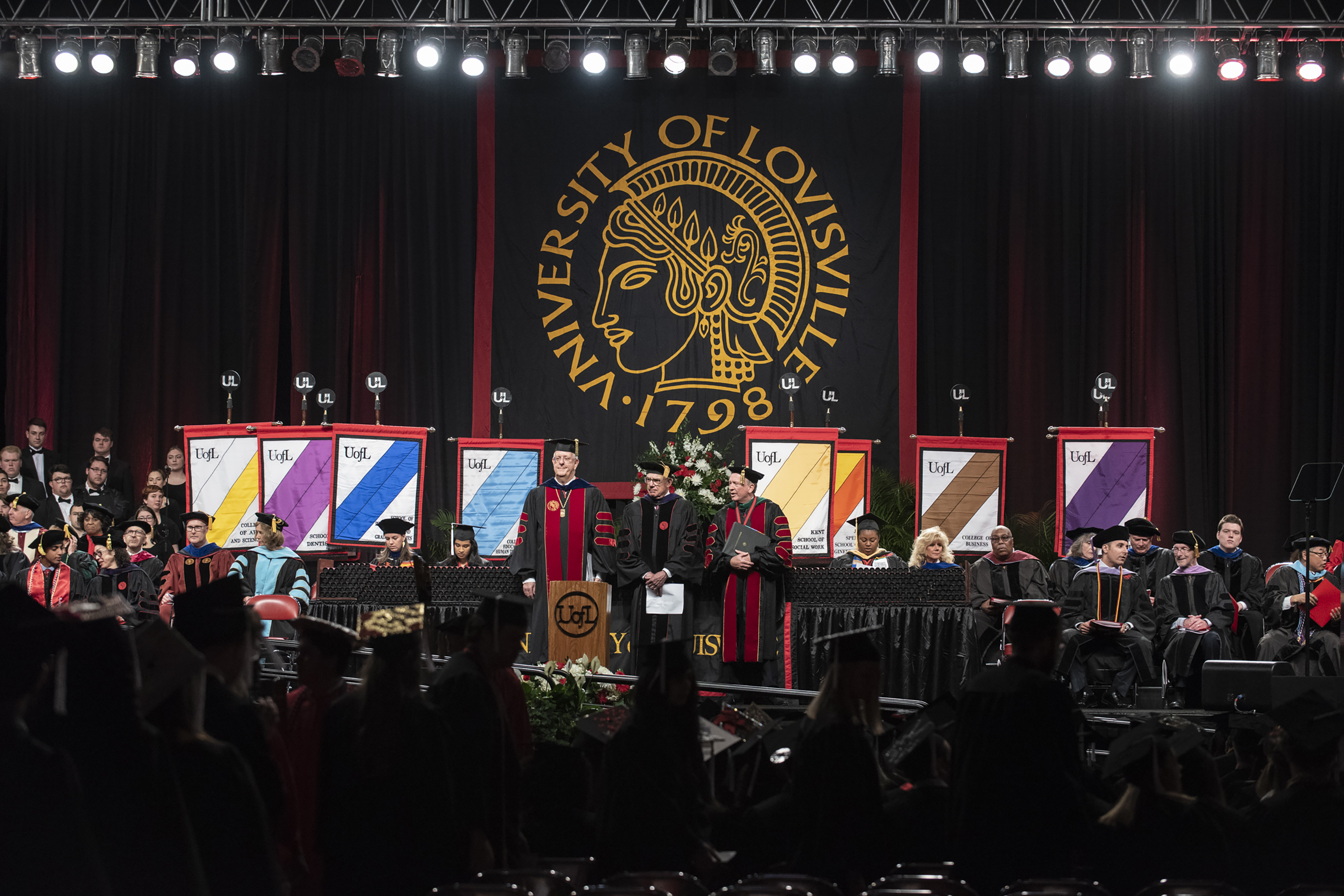
Transform Your Creative Vision Into Your Career
Ready to turn your artistic passion into professional power? Join Kentucky's leading Art + Design program where creativity meets cutting-edge career preparation. Your future in the $1.1 trillion creative economy starts with one decision.
Related Degrees
